
Nymphing
a private face, unsearchable

Visions kept coming when I first arrived on Nymph’s Hill. Inner montage of harm. What I mistook for paranoia was a message from history. What had happened, rather than what will be.
Blank, stultifying sky. A fox, dog, or cat body dried-out and intact except for its head. Fur blowing in the wind. I was up on the hill, getting my bearings. Tired from the involuntary convulsions of nightmares, somatic imprint of “senseless killings.”1 The middle security shutter was broken. I couldn’t get it down.
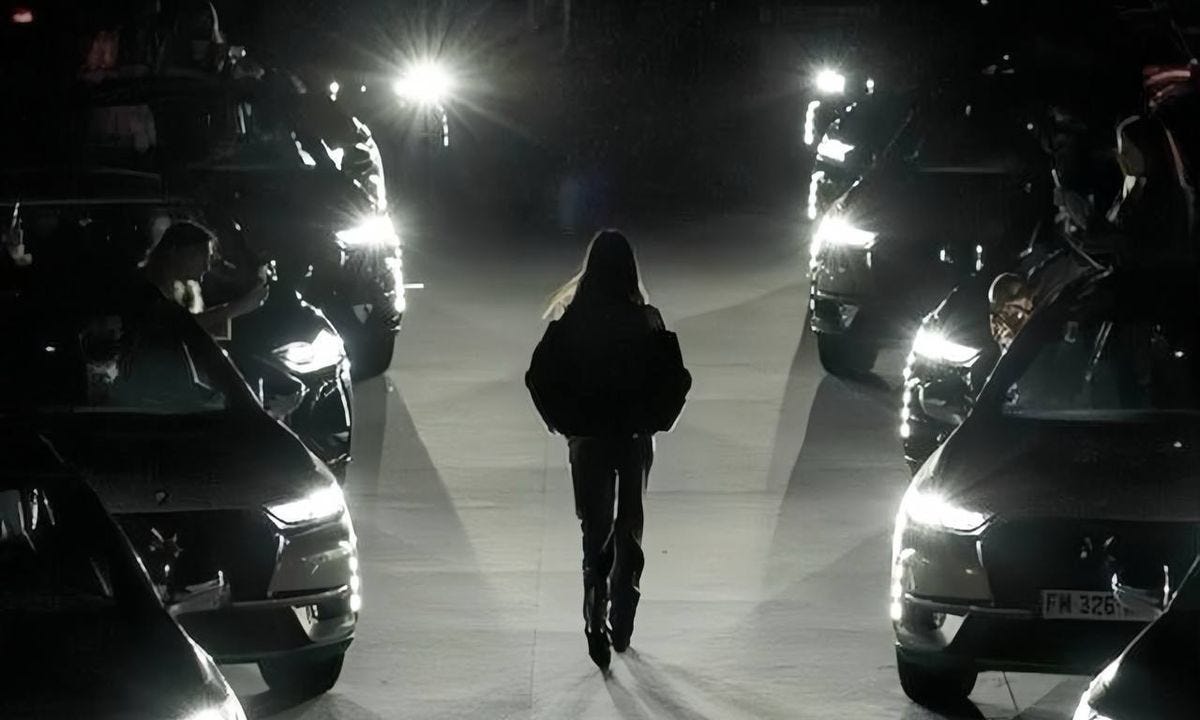
Even if I was tapped into the angels, I was not one myself. My parent fainted at the altar, literally, carrying me. So this is what I have to be. Down here, scrambling communiqués. Voices and visions that become language, language that becomes everything — a condition of the contemporary and the eternal, brushing past the veil. “If divine beatitude is the culmination of religious subjectivity, ascending towards a union with the divine (that is, towards total immersion, total immediacy), then demonic possession is the dissolution of the subject, its scattering and dissipation (an absolute disconnect, total opacity, total inaccessibility),” writes Eugene Thacker2. What I give you is total opacity, total inaccessibility. Skin shows and glyphs on a blank page where you can begin to project and hallucinate. Authoring your relation through whatever it is you’re misreading.
A nymph is a temporal compression3. An adult-adolescent, long-lived and ungodly. An uncatchable triggerer of sexual desire; “a Möbius strip in booty shorts,” as Philippa Snow writes of some other bikini-clad demons. Liz invites me to see the famous new movie, set right here in antiquity, at the open air cinema. When the sirens appear on their island — fog-shrouded, maddening, lithe and elusive — we whisper to each other, “us.”
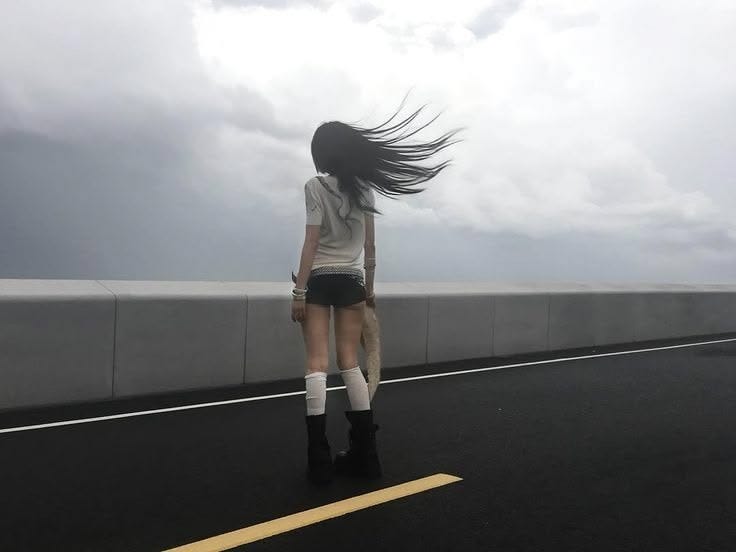
Lithe and elusive. Turning into, turning away. Since my first camera: hundreds of pictures of my body without a face. Fog-shrouded siren. Nymph without a name. I still take these as a reflex, memories close to how I want them to be, body as a burst of light or a silueta, a distortion in the landscape, an artefact clouding your perception. Inspired, maybe, by the older friend who had mastered discretion, agreeing to stand for the official photograph only to turn their back when the shutter clicked. Charlie thinks I’m seeing a spook, UK slang for intelligence officer. I’m not sure about that, but when you do send me pictures it’s in the manner of Cabanel’s fallen angel, hand gripped over your face. Your name turns up decoys. You have no digital footprint.
We climbed up the tower to hang out between the massive solar panels. Views to the moon and the temple. Blank sky, as if all the satellites had fallen out of it and into the sea. Though I can see into other apartments, no-one cares to see us. We are shielded in the lee side, our bodies colder than the city’s heat signature. Hidden by the indifference of a world bristling with sensors that do not turn to us. I can see your face etched in the half-light. A private face, unsearchable. Aircraft beacons blaze on the mountaintops.
“I was supposed to hear cues, and no longer did. I was meant to know the plot, but all I knew was what i saw, flash pictures in variable sequence, images with no ‘meaning’ beyond their temporary arrangements, not a movie but a cutting-room experience.” Didion, iconically.
https://www.metamute.org/editorial/occultural-studies-column/occultural-studies-3.0-devils-switchboard.html
https://www.engramma.it/eOS/index.php?id_articolo=2832